The 11 PM Decision-Fatigue Trap
By the time you brush your teeth and climb into bed, your prefrontal cortex—the part of your brain responsible for planning, structuring, and initiating effortful tasks—has already processed hundreds of micro-decisions.
Emails, traffic, tone of voice in Slack messages, dinner logistics, family schedules: every single one quietly drains the same finite battery.
Now hand that exhausted brain a totally blank lined notebook. Before your pen touches paper, your mind has to answer four open-ended questions: What should I write about tonight? Should I recap the whole day or just the stressful part? How many lines count as 'enough'?
Does this even sound coherent?
On Night 1, novelty carries you through. By Night 4, your brain looks at the blank page, weighs the effort against the effortless glow of your phone, and chooses the screen every single time.
Not because you lack discipline, but because humans always default to the lowest-friction option when tired.
Why 90 Identical Open-Space Pages Outperform Complex Planners
When habit researchers at University College London (Phillippa Lally and colleagues) tracked how real people build automatic daily behaviors, they found it rarely takes the mythical 21 days—it takes an average of 66 to 90 days of repeating the exact same low-friction cue in the exact same context.
This is also why '365 different journal prompts' books quietly fail most busy adults. Reading a brand-new essay question every night feels like school homework.
Some nights the prompt misses what you are actually carrying, so you skip the page—and skipping three nights usually ends the habit for good.
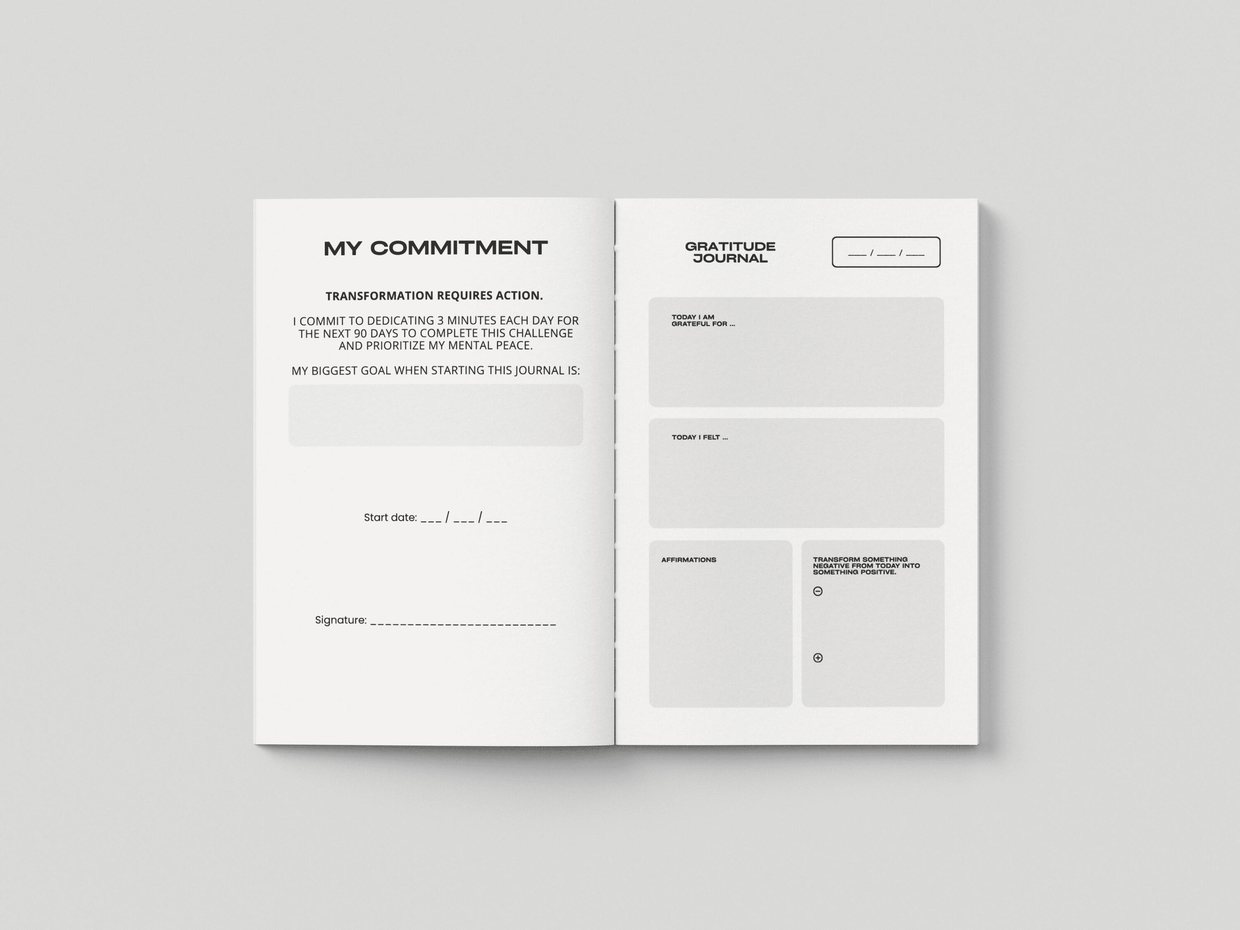
When every daily spread uses the exact same four unlined open boxes—Today I am grateful for…, Today I felt…, Affirmations, and Transform something negative (⊖ → ⊕)—three subtle psychological shifts happen automatically:
- Zero startup hesitation: Your hand knows where to go before you even feel motivated. Four small spaces take roughly 180 seconds from opening the cover to closing the lamp.
- Unlined 'open-space' freedom: Rigid numbered lines subtly scold you if you only write two words. Soft grey open boxes accept three quick bullets on an exhausting Wednesday or a full paragraph on a slow Sunday.
- Pattern visibility across 90 days: Because the four containers stay identical for three months, your recurring stress triggers and quiet stabilizers become impossible to miss when you flip back.
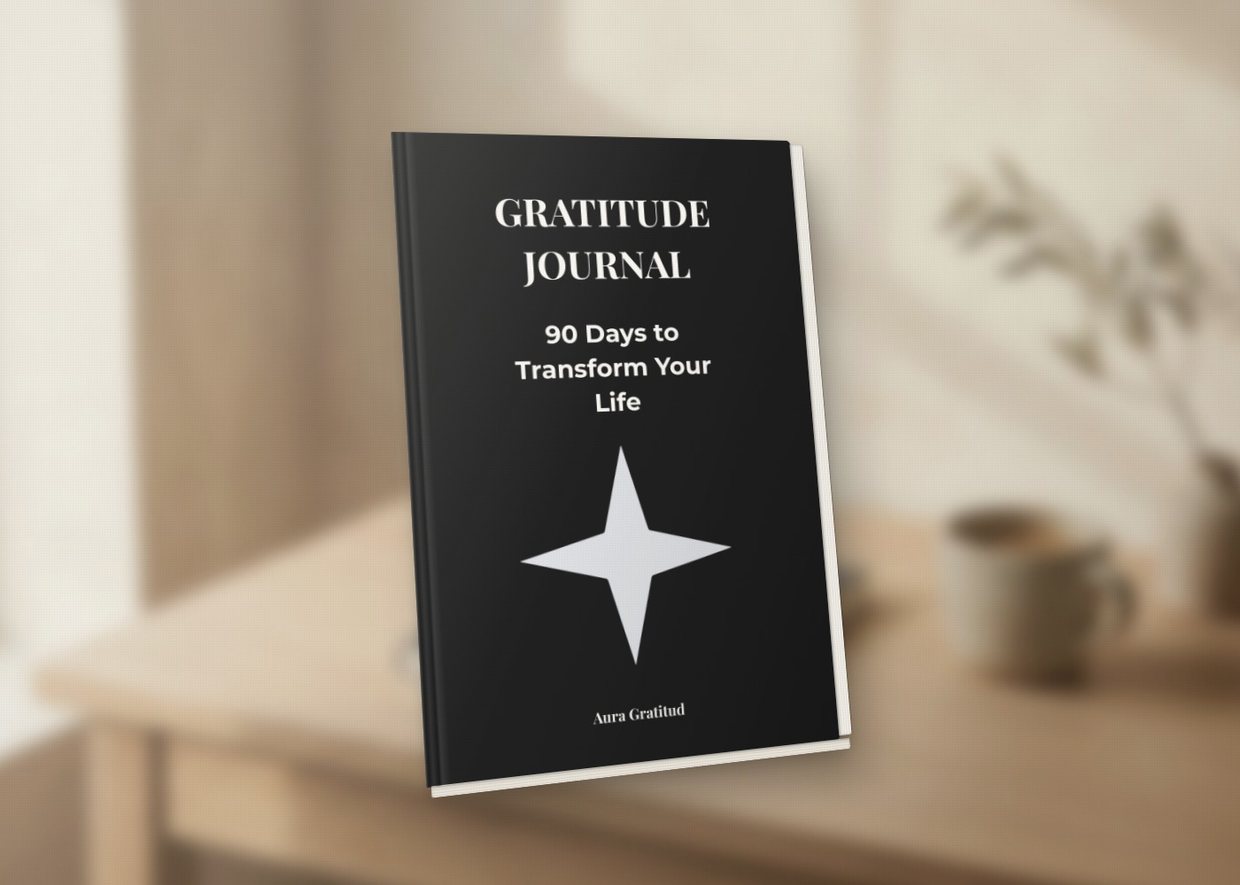
Blank Notebook vs. Phone App vs. The 90-Day 4-Box Paperback
| Factor | Blank Notebook | Phone App | 90-Day 4-Box Paperback (~$11) |
|---|---|---|---|
| Bedtime friction | High (blank-page paralysis) | Medium (login, screens, alerts) | Near zero (4 clear unlined boxes) |
| Average duration | 15–30 minutes | 5–10 minutes | ~3 minutes flat |
| Distraction risk | None | One swipe from email or feeds | 100% screen-free off-switch |
| 90-day follow-through | Rarely survives Day 5 | Notifications muted by Week 2 | Signed Day-1 commitment + 90 undated pages |
Three Mistakes That Break New Journaling Habits (And the Easy Fix)
Even with a clean 4-box layout, most people accidentally sabotage themselves in Week 2 in one of three ways:
- Hiding the notebook inside a drawer: Out of sight literally means out of mind at 10:30 PM. Keep the paperback resting directly on your nightstand with a smooth gel pen lying on top of the cover.
- Writing as if an audience will grade it: Grammar, neat handwriting, and inspiring prose kill consistency. Fragments, messy arrows, and honest single words work better than polished paragraphs.
- Treating a missed night as failure: Travel, late dinners, and sick kids happen. Because every page carries a blank date line (___ / ___ / ___), skipping Thursday costs you nothing—just open the next clean page on Friday and keep your 90-day count moving.