Forced Positivity vs. Evidence-Based Gratitude
| Toxic / Forced Positivity | Grounded 3-Minute Gratitude |
|---|---|
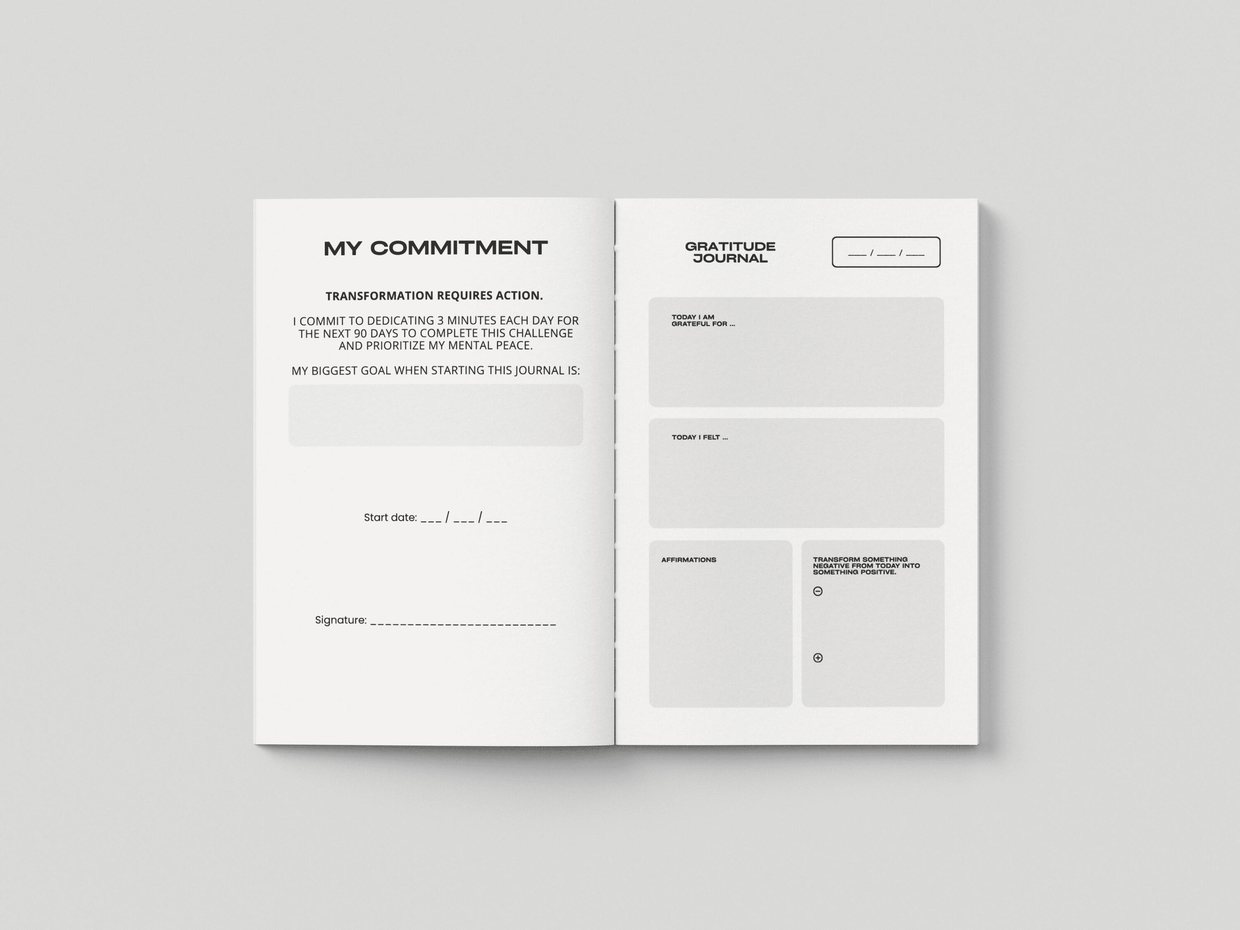
| Pretends exhausting days were 'pure magic' | Names real frustration honestly in Today I felt… & (⊖) |
| Vague slogans ('blessed for everything') | Concrete everyday evidence ('10 quiet minutes with coffee') |
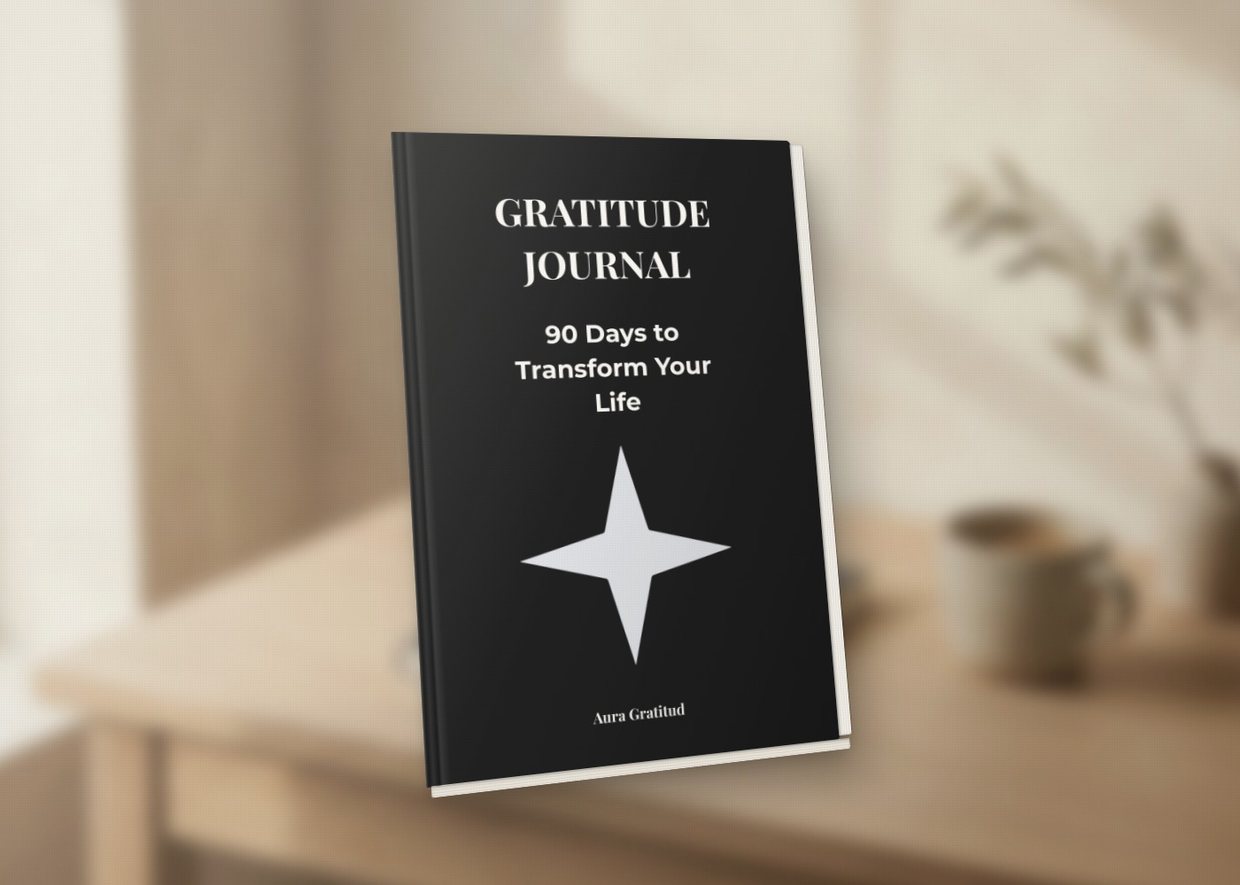
| Pastel fluff and cheesy quotes on every page | Clean matte black cover + minimal unlined boxes |
| Pressures you to write a sunny full-page essay | Accepts three honest bullet words on a depleted Tuesday |
Why Your Brain Naturally Discounts Good Moments
Neuropsychologists refer to the brain's built-in threat scanner as negativity bias. Evolved to keep humans alert to danger, your nervous system encodes one tense email, one rude driver, or one unfinished errand with far more emotional weight than five smooth, ordinary hours.
Left unexamined, that bias quietly distorts your memory of an entire week until life feels heavier than it actually is.
Grounded gratitude has nothing to do with ignoring problems. Think of it as an accurate end-of-day balance sheet: you record the friction honestly and you record three concrete things that stayed steady, so stress doesn't get to rewrite your whole day unchallenged.
3 Rules for a Realistic Gratitude Practice (Zero Cringe)
- Be specific, never grand: Skip vague lines like 'I'm grateful for my life.' Write factual, tiny details your brain immediately recognizes as true: 'hot coffee before emails,' 'no traffic on the bridge,' 'my friend checked in.' Specificity is what actually rewires negativity bias.
- Give frustration its own dedicated space: Trying to force gratitude while suppressing annoyance feels fake. Putting the hard part directly into Today I felt… and the minus side (⊖) first makes the calm lines beside it feel 100% honest.
- Write verifiable affirmations only: If a grandiose statement makes your rational mind argue back, throw it out. Use steady, believable truths: 'I did enough for today,' 'I can handle tomorrow's problems tomorrow,' or 'Slow progress still counts.'
What Skeptics Usually Notice Around Day 30
People who start out skeptical are often the ones who stick with a plain 4-box routine the longest—precisely because it never asks them to perform. Around Week 4, you don't suddenly float around in toxic bliss.
Something much better happens: bad afternoons stay proportional instead of hijacking your entire night, and you start noticing small, durable pockets of steadiness you used to walk right past.