Nighttime Calm · Overthinking · 6 min read

Why Your Brain Races at 2 AM (And the 3-Minute Paper Fix at 10:30 PM)

Stop negotiating with a half-asleep brain in the dark.

Have you ever noticed how a minor annoyance at 2:00 PM turns into a full-blown existential crisis at 2:15 AM? Suddenly a slightly terse email feels like career disaster, a small bill feels catastrophic, and a five-year-old awkward comment plays in crystal-clear high definition.

That isn't sudden midnight clarity or intuition—it is predictable sleep neurobiology working directly against you in the dark.

By Calmere Editorial · Updated November 2026 · Practical, evidence-backed guide
Why Your Brain Races at 2 AM (And the 3-Minute Paper Fix at 10:30 PM)
At 2 a.m., rational perspective is offline while your threat center stays hot—close the loop at 10:30 p.m. instead.
In 20 Seconds · Key Takeaways

Why Midnight Logic Cannot Be Trusted

When your brain transitions into late-night rest, it doesn't power down evenly. Your prefrontal cortex—the calm adult executive center responsible for proportion, logic, and long-term perspective—goes offline first to conserve energy. Meanwhile, your amygdala—the ancient threat-detection alarm—remains stubbornly sensitive.

Trying to 'think through' your problems at 2 AM literally recruits a half-asleep logic center to argue with a hyper-alert alarm bell in complete sensory darkness. Of course every worry feels ten times larger. You will never out-think a 2 AM spiral inside your head.

Stop the Spiral at 10:30 PM Before Turning Off the Lamp

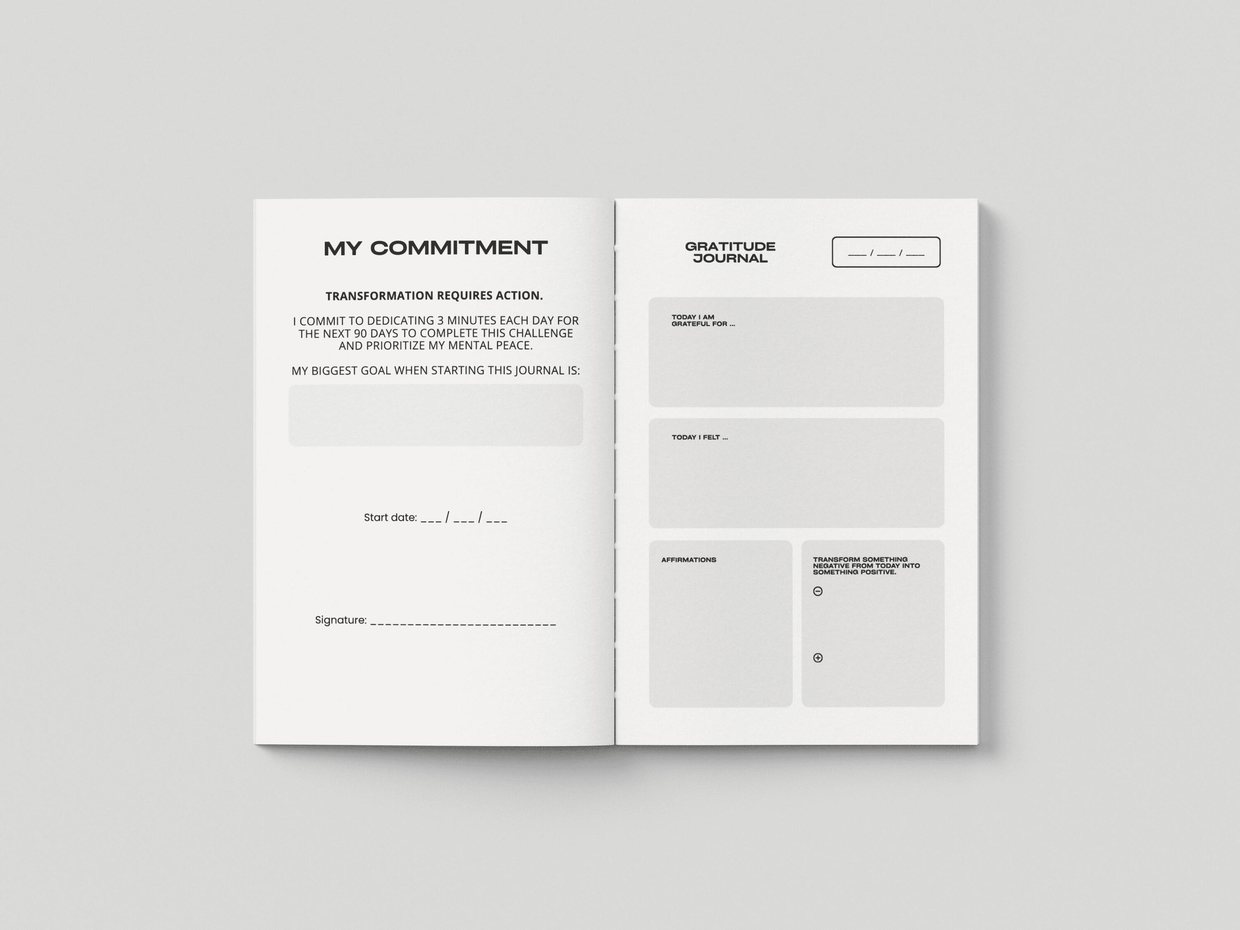
The real leverage isn't fighting midnight thoughts at 2 AM—it is emptying your working memory at 10:30 PM while your rational perspective is still awake. Four short unlined boxes take roughly three minutes:

  1. Anchor three concrete steadiness cues (Today I am grateful for…): Remind your threat scanner of three real things that stayed intact today.
  2. Name the residue (Today I felt…): Put one exact emotion word on paper to lower limbic intensity.
  3. Write one calm night rule (Affirmations): A steady boundary like 'Problems shrink in daylight; tonight belongs to sleep.'
  4. Evict the #1 loop (⊖ → ⊕): Write the worry most likely to wake you beside (⊖), then write the exact morning time you'll handle it beside (⊕). Close the book.

Your 60-Second Emergency Protocol If You Still Wake Up at 2 AM

Even with a solid bedtime habit, rough weeks still bring an occasional 2 AM wakeup. Whatever you do, do not pick up your phone to check the clock or scroll—one burst of screen light signals morning to your brain and wakes up your dopamine system instantly.

Instead, stay in dim warm light (or click on a soft bedside lamp), open your journal to the edge of tonight's page, jot the intrusive loop down in ten sloppy words beside (⊖), close the cover, and take five slow extended-exhale breaths.

Once working memory sees the thought safely parked in ink, the urge to rehearse it evaporates.

The Physical Companion · Around $11 on Amazon

Reclaim your nights before the lights go out (~$11).

96-page matte black bedside journal · 4 open boxes · 3 minutes before sleep · Amazon Prime.

Matte black 96-page paperback of The 90-Day Gratitude Journal standing on a warm bedside table
Actual matte black paperback cover with subtle silver four-point star—made for calm bedside lighting.
Real open interior spread showing signed My Commitment page and four unlined open-space daily boxes
Actual open spread: signed My Commitment page + four unlined boxes repeated for 90 undated nights.
The 90-Day Gratitude Journal (~$11) 96 pages · 90 undated open-space nights · Matte black paperback · Shipped by Amazon
View on Amazon →

Common Questions

Can I use it if I wake up in the middle of the night?

Yes—parking a 2 AM worry onto paper in low warm light gets it out of working memory far faster than staring at the ceiling.

Does it require long writing?

Not at all—3 minutes and a few honest phrases are enough to signal closure.

Is this medical advice for chronic insomnia?

No—it is a grounded behavioral bedtime habit. If you experience persistent severe insomnia, always speak with a healthcare professional.

How much does it cost?

Around $11 on Amazon, fulfilled directly via Prime.

Keep Reading

More Calmere Field Guides